Your Body Leaves Clues: What 30 Days of Food Journaling Can Reveal About Diverticulitis
Sep 27, 2026
For years, I was trying to manage diverticulitis while raising children, running a home, and handling the never ending list of things that needed my attention.
School runs. Appointments. Meals. Schedules. And the constant mental load of making sure everyone had what they needed.
Meanwhile, my body was trying to get my attention.
I would have pain or digestive symptoms and wonder what caused them. Was it something I ate that day? Something from two days ago? Stress? Poor sleep? Constipation? Eating too much too soon after a flare?
When you are trying to remember it all in your head, everything can begin to blur together.
That is why I began journaling.
I was skeptical at first. I did not see how writing down my meals and symptoms could make much difference. But once I stayed with it, I began to notice connections I had missed.
The journal was never about writing beautiful pages or recording every thought in my head. It was practical. I wrote down what I ate, how much I ate, how I felt, what my bowel movements looked like, how I slept, and what was happening in my life.
Little by little, the picture began to come together.
My body had been giving me information all along. The journal helped me see it. 🌿
Diverticulitis Is About More Than One Meal
When symptoms show up, food often gets all the blame.
That makes sense. Food is easy to point to because you can see it on your plate. But your body responds to much more than one food or one meal.
Your digestion can also be influenced by how quickly you eat, the size of your portions, constipation, hydration, sleep, movement, stress, medications, and where your body is in flare recovery.
This is one reason it can be hard to identify a single “trigger food.” There is no one food that has been proven to cause diverticulitis attacks in everyone. Your tolerance can also change depending on what is happening in your body that day.
For example, you may eat a food one week and feel fine. Then you eat it again during a stressful week, after poor sleep, or while your digestive system is still sensitive, and your body responds differently.
The food may be one piece of the puzzle, but it may not be the whole puzzle.
A journal gives you a wider view.
What a Food Journal Can Show You
A useful food journal tracks more than food. It helps you compare what went into your day with how your body responded.
Over time, you may begin to notice connections such as:
-
Larger portions leave you more uncomfortable than smaller portions of the same food.
-
Your symptoms increase when you add fiber too quickly.
-
Certain meals feel better when foods are cooked softer.
-
Constipation often shows up before pain or pressure.
-
Poor sleep changes your appetite, energy, or digestion the next day.
-
Stress causes you to rush through meals or ignore the urge to use the bathroom.
-
A food feels comfortable in one stage of recovery but is too much in another.
Those details matter.
They help you move away from long, fear based food lists and toward a more personal understanding of what your body needs.
The Mind and Body Belong in the Same Conversation
One of the most important things journaling taught me was that I could not separate my digestion from the rest of my life.
There were days when the food looked fine on paper, but my nervous system was wound tight. I was rushing, worrying, holding tension in my belly, or carrying more than I wanted to admit.
That did not mean my symptoms were “all in my head.” It meant my body and mind were communicating with each other, as they always do.
Your journal can help you notice that conversation.
Along with meals and symptoms, record your mood, stress, sleep, and energy. You do not need to write a full page. A few words or a number from one to ten is enough.
You might write:
-
Stress was eight out of ten today.
-
Slept five hours and woke up tired.
-
Ate lunch while answering emails.
-
Felt calmer after walking outside.
-
Belly felt tight before dinner.
This gives context to your symptoms. It also shows you where simple support may help.
How Journaling Supports the Four Stages of Eating
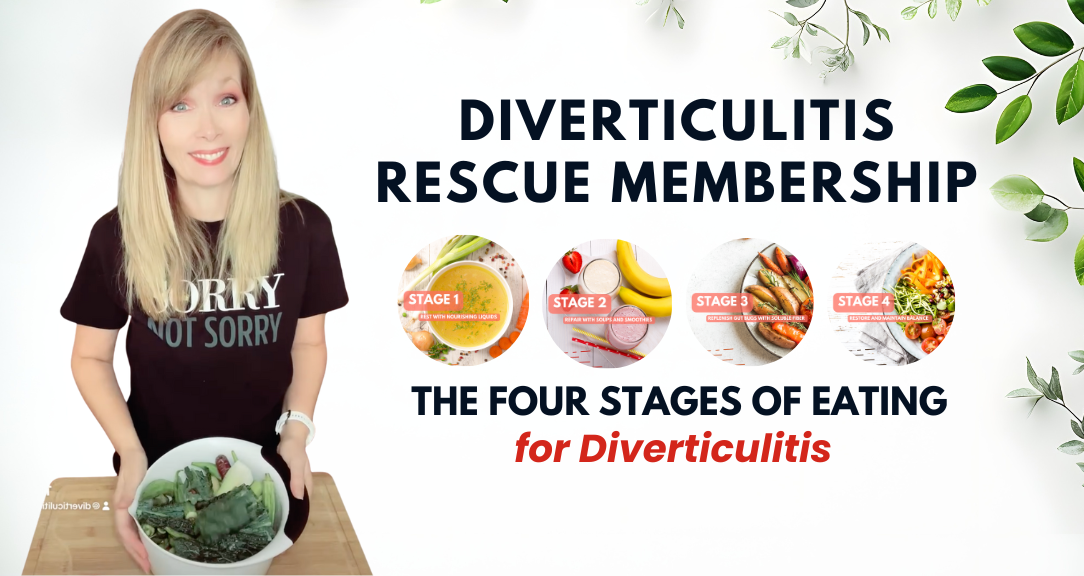
The Four Stages of Eating are designed to help you respond to what your body needs during a flare, early recovery, rebuilding, and everyday life.
A journal helps you use those stages with more awareness.
Instead of moving forward because a certain number of days has passed, you can look at what your body is doing. Is the pain easing? Are your bowel movements changing? How did you respond when you added a new texture, a larger portion, or more fiber?
You can also see when it may be wise to pull back for a meal or two and give your system more support.
This is not about eating perfectly. It is about learning how to adjust.
Your needs may change from one day to the next. The more you practice listening, the easier it becomes to choose food and daily habits that match the season your body is in.
What to Track Each Day
You do not need to record every tiny detail. Focus on the information that can help you make better choices.
Food and Drinks
Write down what you ate, about how much, and when you ate it. Include water, coffee, alcohol, and other drinks.
Symptoms
Note pain, pressure, gas, bloating, nausea, urgency, or other changes. Add the time and intensity when you can.
Bowel Movements
Track how often you go and what the stool looks like. This can help you see constipation, diarrhea, or changes in your normal pattern.
Sleep and Energy
Record how long you slept, how rested you felt, and whether your energy changed during the day.
Stress and Emotions
Use a few words to describe your day. Calm, rushed, worried, angry, sad, joyful, or overwhelmed can all offer helpful context.
Movement and Support
Include walking, yoga, breathwork, supplements, medications, and anything else that may affect how you feel.
Five Ways to Make Food Journaling Useful
1. Keep It Simple
If journaling feels like homework, you are less likely to keep doing it. Short notes count. Honest information is more useful than perfect information.
2. Write Things Down While They Are Fresh
Waiting until the end of the week makes it easy to forget portions, symptoms, and changes. Take a minute after meals or before bed to fill in what you remember.
3. Record Amounts and Preparation
“Ate carrots” does not tell you the full story.
Were they raw, roasted, or cooked until soft? Did you eat a few bites or a full bowl?
Preparation and portion size can change how a food feels in your body.
4. Look for Repeated Patterns
One uncomfortable day does not always mean a food is a problem.
Look for the same response more than once, and consider what else was happening at the time.
5. Review One Week at a Time
At the end of each week, ask yourself:
-
What supported me?
-
What felt like too much?
-
What changed in my symptoms or bowel movements?
-
What was happening with my sleep and stress?
-
What is one small adjustment I want to try next week?
Change one or two things at a time. If you change everything at once, it becomes harder to know what made the difference.
Your Journal Is a Tool, Not a Judge
Your journal is not there to grade your choices.
It is there to help you pay attention with curiosity.
If you eat something and feel uncomfortable, you have gathered information. If a meal feels good, that matters too. Record both.
Do not use one hard day as proof that you have failed or that you must fear a food forever.
Bodies change. Portions matter. Preparation matters. Timing matters. Your stage of recovery matters.
Give yourself room to learn.
Your Body Has Been Speaking. Let’s Listen.
Journaling changed the way I cared for myself because it helped me see what memory alone could not hold.
It showed me that my body was not responding to food in isolation. My meals, stress, sleep, bowel habits, movement, and emotions were all part of the same picture.
You do not need to figure out everything in one day.
Begin with today’s meal. Notice how you feel. Write it down. Then keep listening.
Thirty days of small notes can reveal more than months of trying to remember what happened and when.
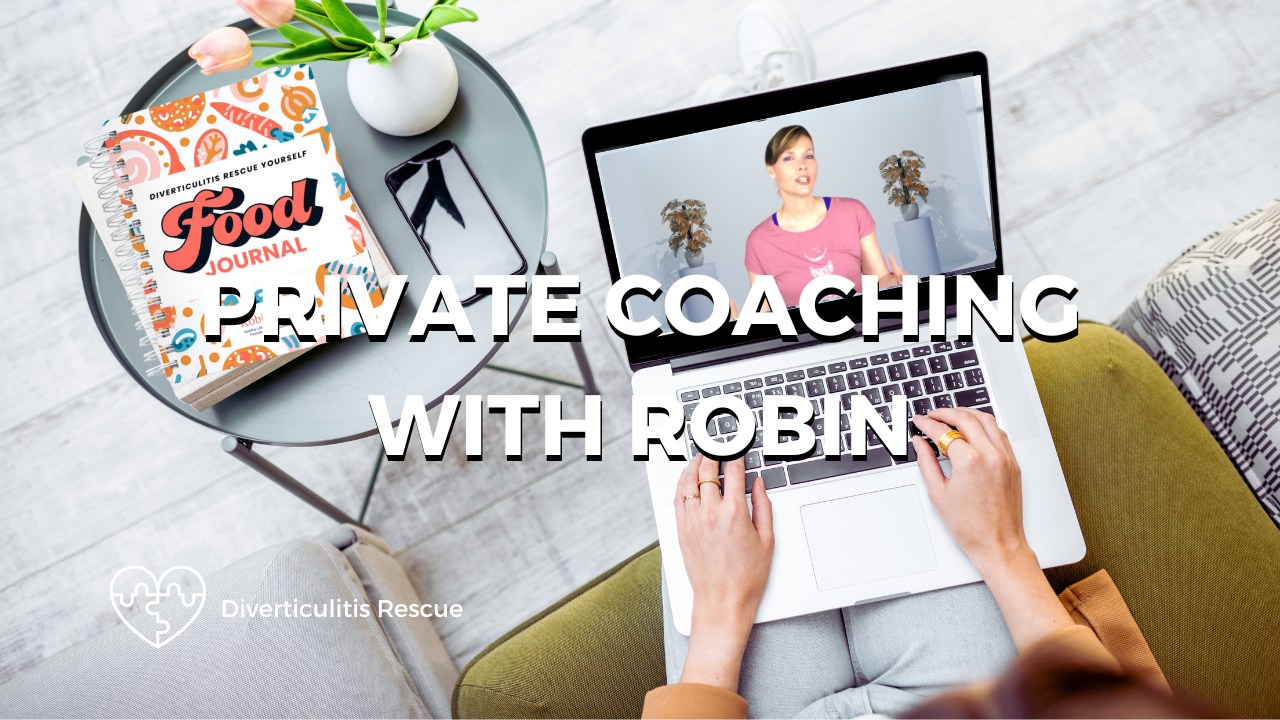
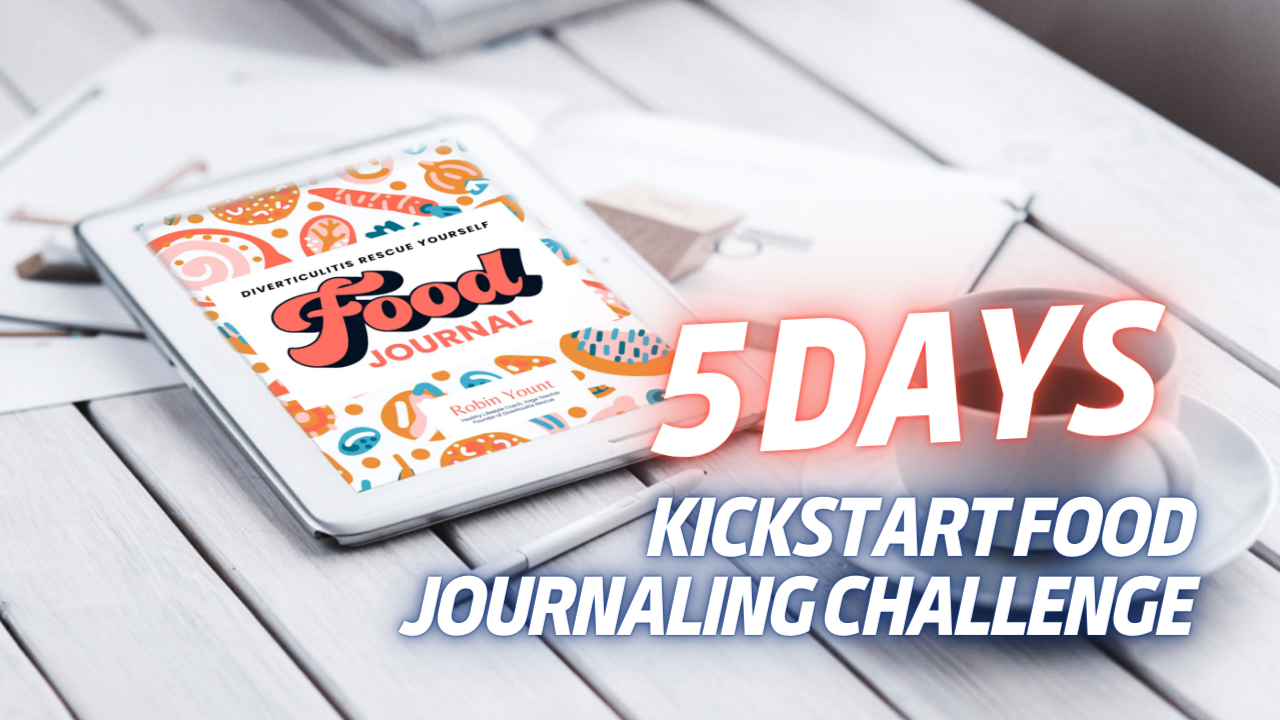
If you would like a simple place to track your meals, symptoms, stress, sleep, bowel movements, movement, water, and weekly reflections, my 30-Day Diverticulitis Food Journal is ready for you.
Your body has its own wisdom. Give yourself a place to hear it. 🌿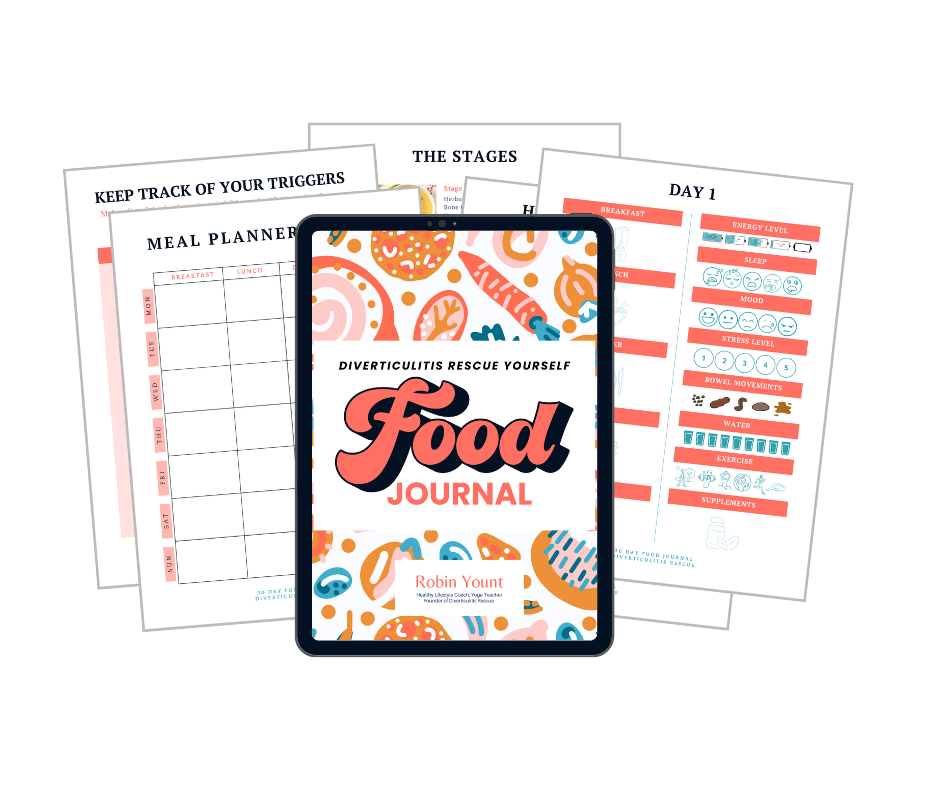
Stay Connected with My Newsletter
YOUR SOURCE FOR DIVERTICULITIS SUPPORT & INSPIRATION
Dive into our newsletter. Each edition delivers personal stories, natural strategies, and practical tips to help you find balance, relief, and strength on your journey.
Sign up with your email to stay connected and gain exclusive diverticulitis insights to support your gut health and a flare-free life.
We hate SPAM. We will never sell your information, for any reason.
Diverticulitis Rescue Yourself Program: The Four Stages of Eating for Diverticulitis

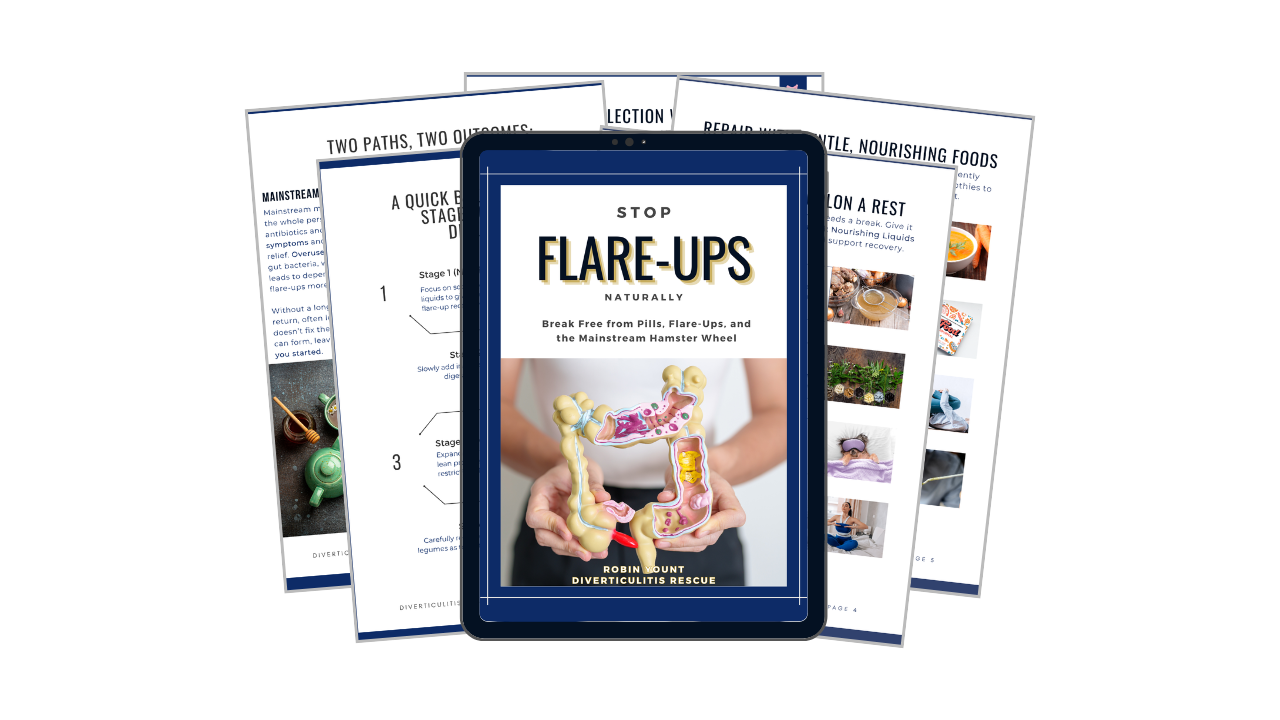

The deeper work happens inside Robin’s membership program where you gain a community, recipes, flare support, mind body practices, and real-life strategies... all in one place.